Don't Buy Until You Read This: Sony Bravia 8 II vs Kaleidescape Strato E
The pursuit of the ultimate home cinema experience often leads enthusiasts down two distinct but intersecting paths: the display technology that renders the image and the source hardware that provides the data. In the current landscape of premium home theater, two names have recently surfaced as frontrunners for those unwilling to compromise on quality: the Sony Bravia 8 II OLED television and the Kaleidescape Strato E movie player. While these devices serve entirely different functions within a media room—one being the "eyes" and the other being the "brain"—they represent the pinnacle of their respective categories. Choosing how to allocate a luxury budget between a flagship display and a reference-grade source component requires an understanding of how they complement each other and where the true bottlenecks in audio-visual performance reside.
For the modern videophile, the Sony Bravia 8 II represents the evolution of OLED technology, refined by Sony’s industry-leading image processing. Conversely, the Kaleidescape Strato E addresses the often-overlooked reality that even the best television in the world is limited by the quality of the signal it receives. Streaming services, while convenient, involve heavy compression that strips away the fine detail and high-bitrate audio that high-end displays crave. This article dives deep into these two heavyweights, analyzing their technical merits, real-world utility, and which one should take priority in your next home cinema upgrade.
The Sony Bravia 8 II: A Masterclass in OLED Refinement
Sony has long maintained a reputation for prioritizing "creator's intent," a philosophy that ensures the image on the screen looks exactly as the cinematographer intended. The Bravia 8 II is the latest manifestation of this ideal. Built upon a high-performance OLED panel, its primary strength lies not just in the hardware, but in the XR Processor. This "cognitive" intelligence analyzes the scene in real-time, identifying focal points—such as a human face or a distant sunset—and optimizing contrast, color, and clarity to mimic how the human eye perceives the world.
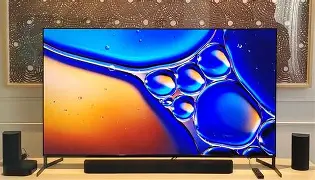
In a real-world living room environment, the Bravia 8 II excels because of its near-infinite contrast ratio. Because each pixel in an OLED panel can turn completely off, the "blacks" are truly black, which is essential for viewing atmospheric films like The Batman or space-based epics like Interstellar. The "II" designation in this series brings improved peak brightness over its predecessor, closing the gap between traditional OLEDs and the newer Mini-LED displays. This makes it a viable option for moderately lit rooms, though it remains most at home in a controlled environment where its nuanced shadow detail can shine.
Beyond the picture, Sony has integrated its Acoustic Surface Audio+ technology. Rather than using traditional downward-firing speakers that often sound thin, the Bravia 8 II uses actuators behind the panel to vibrate the screen itself, turning the entire display into a speaker. This creates a unique sensation where the sound originates exactly from where the action is happening on screen—if a character speaks from the left side of the frame, the voice physically moves to that location. For many buyers, this eliminates the immediate "need" for a soundbar, though most pairing this TV with a Kaleidescape system will likely opt for a dedicated surround sound setup.
Pros and Cons of the Sony Bravia 8 II
- Pro: High-precision XR Processor provides the most naturalistic upscaling and motion handling in the industry.
- Pro: Perfect black levels and exceptional contrast make it the ideal choice for dedicated movie nights.
- Pro: Acoustic Surface Audio+ provides a superior integrated sound experience compared to almost all competitors.
- Pro: Sleek, minimalist design with a versatile stand that accommodates various soundbar heights.
- Con: While brighter than previous years, it still lacks the raw "searing" brightness of high-end Mini-LED or QLED panels in very sunny rooms.
- Con: Premium pricing compared to other OLED manufacturers who use similar raw panels.
- Con: Risk of permanent image retention (burn-in) if used primarily for news channels or gaming with static HUDs for 10+ hours a day.
The Kaleidescape Strato E: The Gold Standard of Source Quality
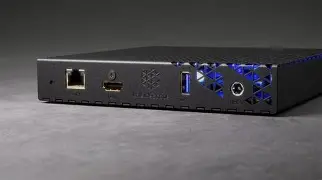
While the Bravia 8 II is about how you see the image, the Kaleidescape Strato E is about what you are seeing. Most consumers believe that a 4K stream from a popular app is the "best" available quality. However, a typical 4K stream operates at a bitrate of 15 to 25 Mbps. In contrast, the Kaleidescape Strato E delivers bitrates up to 100 Mbps. This is not just a marginal improvement; it is a transformative leap in fidelity. The Strato E is a movie server that downloads bit-for-bit identical copies of the original studio masters, ensuring that every pixel and every sound wave is preserved without the artifacts of internet-based compression.
The "E" in Strato E stands for Essentials, a streamlined entry point into the Kaleidescape ecosystem that doesn't sacrifice the core performance of their larger servers. It acts as a playback device that connects to your network and accesses the Kaleidescape store, which features thousands of titles in true 4K Ultra HD and lossless Dolby Atmos audio. For a buyer who has invested $3,000 or more into a high-end display like the Bravia 8 II, using a standard streaming stick is like putting low-octane fuel into a Ferrari. The Strato E provides the high-octane data required to see what the TV is actually capable of.
One of the most praised aspects of the Strato E is its user interface. It is widely considered the best in the industry—an elegant, fluid "cover art" view that allows you to browse your collection with zero lag. Furthermore, the device includes metadata-driven features. It can tell your smart home lighting system to dim when the movie starts and bring the lights up slowly when the ocean-blue credits roll. It also enables "Scripts," allowing users to play specific iconic scenes (like the canyon run in Top Gun: Maverick) instantly without navigating menus. This level of curated luxury defines the Kaleidescape experience.
Shop the latest TVs & Home Theater picks on Amazon.
Browse Now →Pros and Cons of the Kaleidescape Strato E
- Pro: Provides the highest possible video and audio quality available for the home, exceeding physical 4K Blu-ray discs in convenience and matching them in fidelity.
- Pro: Massive reduction in "banding" and "macro-blocking" artifacts common in dark scenes on streaming platforms.
- Pro: Lossless audio support (Dolby Atmos, DTS:X) that provides significantly more dynamic range and "thump" for home theater speakers.
- Pro: The most sophisticated and reliable user interface in the luxury electronics market.
- Con: High entry cost compared to any other media player or disc player.
- Con: Requires a robust internet connection to download large movie files (often 60GB to 100GB per film).
- Con: The cost of purchasing movies on the Kaleidescape store is often higher than buying physical media or digital licenses on other platforms.
Direct Comparison: Display vs. Source
To understand the relationship between these two pieces of hardware, it is helpful to look at how they manage the critical pillars of video quality: Resolution, Dynamic Range, and Bitrate. The following table illustrates where each device holds the primary responsibility for the viewing experience.
| Feature | Sony Bravia 8 II (The Display) | Kaleidescape Strato E (The Source) | The "Winner" for This Category |
|---|---|---|---|
| Color Accuracy | Responsible for reproducing colors accurately via panel calibration. | Provides 10-bit or 12-bit color data without compression errors. | Sony Bravia 8 II |
| Shadow Detail | Uses OLED "Perfect Black" to ensure shadows don't glow. | Ensures dark areas aren't "muddy" or pixelated due to low bitrate. | Tie (Synergetic) |
| Audio Fidelity | Can play sound, but limited by physical driver size. | Provides lossless, high-resolution audio pass-through. | Kaleidescape Strato E |
| User Ease of Use | Standard Google TV interface; functional but cluttered with ads. | Bespoke, cinematic interface designed for enthusiasts. | Kaleidescape Strato E |
| Longevity | Display tech evolves every 3–5 years; panels eventually degrade. | Hardware remains relevant as long as 4K remains the standard. | Kaleidescape Strato E |
Buying Guide: Which Should You Prioritize?
The question for most buyers isn't necessarily which of these is "better," as they are not competitors. Instead, the question is: *If I can only afford one significant upgrade this year, where should my money go?* The answer depends heavily on your current infrastructure and what part of the movie-watching experience currently frustrates you the most.
Scenario A: You have an older LCD or entry-level LED TV
If you are currently watching movies on a five-year-old mid-range LED television, the Sony Bravia 8 II should be your absolute priority. No amount of high-quality data from a Kaleidescape server can make up for a display that has "blooming" (light bleeding into dark areas), poor viewing angles, or inaccurate colors. The jump from a standard LED to a Sony OLED is arguably the single most dramatic improvement a consumer can make. The contrast and color vibrance of the Bravia 8 II will make even your existing Netflix and Disney+ streams look like a revelation.
Scenario B: You already own a high-end 4K OLED or Projector
If you already have a premium display, such as a previous-generation Sony A90J or a high-end LG G series, you are likely hitting the "plateau of diminishing returns" with your screen. In this case, the Kaleidescape Strato E is the missing link. You have a display capable of incredible feats, but you are feeding it "starvation rations" via compressed streaming apps. Adding a Strato E to a high-end display reveals the textures of clothing, the subtle grain of 35mm film, and an audible "openness" in the soundtrack that a streaming app simply cannot produce. For the owner of an existing great screen, the source is the next frontier.
Scenario C: The Dedicated Home Theater Build
For those building a room from scratch, these two should be viewed as a pair. The Bravia 8 II behaves as the reference monitor, while the Strato E acts as the reference library. In a dedicated theater, the automation capabilities of the Kaleidescape—communicating aspect ratio changes to the display or integration with lighting controllers—elevate the experience from "watching a TV" to "attending a premiere."
Understanding the Real-World Use Cases
To truly appreciate these devices, one must look at how they handle challenging content. Consider an extremely difficult scene: the "Long Night" battle in Game of Thrones or the underwater sequences in Avatar: The Way of Water.
On a standard TV with a standard stream, these scenes often look like a distracting mess of "digital blocks" (macro-blocking) because the streaming service's algorithm can't keep up with the complexity of the darkness and motion. When you combine the Sony Bravia 8 II and the Kaleidescape Strato E, the blocks disappear. The Sony provides the deep black inkiness to represent the shadows, and the Kaleidescape provides the high-bitrate data so the "noise" in those shadows is actually fine, intended detail instead of compression errors. This synergy is why the "high-end" market exists; it is the pursuit of removing the distractions that remind you that you are watching a digital recording.
Find top-rated TVs & Home Theater products at great prices.
Browse Now →Buyers should also consider the "Atmospheric" factor. The Sony Bravia 8 II features a very low-reflection coating. In a home with windows, this is a massive benefit for midday sports or casual viewing. The Kaleidescape, however, is purely focused on the "Cinematic" factor. It doesn't have "apps" like YouTube or Hulu; it is a dedicated device for those who want to sit down, shut the world out, and lose themselves in a story. This distinction defines the target audience: the Sony is for everything, while the Kaleidescape is for the *important* things.
Technical Deep Dive: Processing vs. Bitrate
A common misconception is that "4K is 4K." This couldn't be further from the truth. The Sony Bravia 8 II uses its XR Clear Image technology to "clean up" low-quality signals. It tries to guess what the missing data should look like when you're watching a grainy 1080p broadcast. It is remarkably good at this, but a "guess" is never as good as the truth.
The Kaleidescape Strato E provides the "truth." Because it downloads the files rather than streaming them, it is not subject to the ebbs and flows of your home Wi-Fi. If your internet slows down for a second, a Netflix stream will drop in resolution or buffer. A Kaleidescape movie will never buffer, because the hardware is reading the data directly from its internal storage. This reliability is a major selling point for those who host "movie nights" and want to avoid the embarrassment of a spinning loading circle in the middle of a climax.
Conclusion
The Sony Bravia 8 II and the Kaleidescape Strato E represent two different halves of the same coin. The Sony is a masterpiece of visual reproduction, offering a level of color accuracy and contrast that was once the exclusive domain of professional mastering monitors. It is the essential foundation of any modern living room. The Kaleidescape Strato E, meanwhile, is the ultimate curator of content, ensuring that your foundation is never wasted on subpar material.
If budget allows, the combination of these two devices creates a "reference-level" home cinema that rivals many commercial theaters. However, for most, the journey begins with the display. The Sony Bravia 8 II is the more versatile, immediate upgrade for the average household. But for the enthusiast who has already mastered the visual side and finds themselves wondering why their "4K" movies don't look quite like they remember in the cinema, the Kaleidescape Strato E is the final, essential piece of the puzzle. Choosing between them is less about which is better, and more about identifying where in the chain your cinema experience is currently being held back.