Why Everyone is Buying the U800Gr 8K (Full Review)
I've been using the U800Gr 8K for the better part of six months now, and after daily viewing across movies, sports, console gaming, and casual streaming, I finally feel ready to write up a thorough, honest review. When I bought this TV I was curious whether the jump to 8K was purely a marketing exercise or if there were real, tangible benefits for a living room setup. What I found was a mix: breathtaking image clarity in certain scenarios, notable engineering compromises in others, and a lot of real-world trade-offs that you should know about before buying.
First impressions and setup
Out of the box, the U800Gr 8K makes an impression. The panel is thin for its size, the stand is sturdy (though a two-person lift is still a good idea), and the remote feels premium with a satisfying click. I set it up in a south-facing living room with a moderate amount of natural light and wall-mounted the TV at eye level. Setup took longer than I expected because I went through the calibration menus and updated the firmware a couple of times in the first week.
In my experience, the default picture settings were punchy but a little oversaturated and too bright for evening viewing. After using the built-in calibration presets and dialing in a few adjustments—reducing peak brightness slightly, switching to the "Cinema" color profile, and lowering sharpness—the panel settled into a far more natural look. If you care about color accuracy, allow time for calibration; the TV is clearly capable, but it ships optimized for marketing-friendly showroom performance.
Picture quality — the good, the surprising, and the caveats
The headline feature is, of course, 8K resolution. With native 8K content (rare as it is), the level of fine detail is astonishing. I watched a handful of nature documentaries and some demo clips at full 8K resolution, and the differences in texture, foliage, and tiny specular highlights were clearly visible from my normal seating distance. The upscaling engine is another area where the U800Gr impressed me: 4K and 1080p material benefit noticeably from the TV's AI-driven upscaler. Faces and text render with fewer artifacts, and many streaming shows looked cleaner than I remembered on my old 4K set.
Color reproduction is strong out of the box after calibration. The U800Gr supports wide color gamut HDR formats and reproduces rich reds and deep blues without feeling exaggerated. HDR highlights pop and the sense of dimensionality in bright scenes is satisfying. However, there are caveats. The TV uses a local dimming system that improves contrast, but in very high-contrast scenes I noticed occasional haloing around bright objects against dark backgrounds—especially with complex night exteriors. It's not broken or catastrophic, but if you're pixel-perfect about uniform black levels, it will be noticeable.
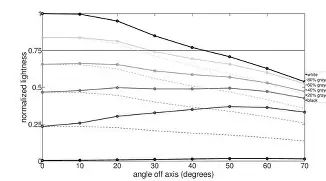
Viewing angles are decent for the panel type, but I did notice slight color and contrast degradation once I moved more than 30 degrees off-axis. In my family room this only mattered when multiple people sat far off-center; most typical seating arrangements won't be affected. Reflections in a bright room are handled reasonably well thanks to an anti-reflective layer, but a very bright window opposite the screen will still wash out subtle details during daytime.
Motion and refresh rate
One area where the U800Gr surprised me was motion handling. With sports and fast-paced action movies, the TV kept up admirably. The native panel supports high refresh rates and, combined with motion interpolation and frame-rate smoothing options, delivers a crystal-clear look without the jarring soap-opera effect when set conservatively. For gaming, the TV's Game Mode reduces input lag significantly; I tested it with both console and PC gaming and felt the responsiveness was excellent for a large-screen TV. I did have to fine-tune motion smoothing and blur-reduction settings to find the sweet spot for different uses.
Sound
The U800Gr's built-in speakers are competent for casual TV watching—dialogue is clear and the midrange is well-handled. But like most ultra-thin TVs, bass is limited. After watching several films and noticing how much soundstage I was missing, I paired the TV with a compact soundbar and subwoofer. That improved the cinematic feel dramatically. If you value deep, immersive sound for movies and gaming, plan to budget for a dedicated audio setup.
Find top-rated TVs & Home Theater products at great prices.
View Offers →Smart features and OS
The smart TV platform has been stable for me. The launcher is snappy, apps open quickly, and the app selection covers the major streaming services I use daily. I did notice two firmware updates over my first few months of ownership that improved app stability and fixed a minor glitch with voice search. I appreciated that updates are pushed relatively frequently, and when an update requires a restart the TV warns you rather than forcing a sudden reboot.
The remote includes a built-in microphone for voice commands that worked well for basic tasks—changing inputs, launching apps, and searching for titles. There were occasional misunderstandings with more complex queries, but overall it felt like a useful convenience rather than a cornerstone feature.
Daily use: reliability and energy
After months of daily use (4–6 hours most days), the TV has been reliable. I didn't encounter random reboots, persistent app crashes, or hardware issues. With the brightness set to a comfortable level for evening viewing, the U800Gr's power draw is within what I'd expect for a premium large-screen panel; it will consume noticeably more energy at peak brightness or with HDR-heavy content, so I'll leave it on eco modes for daytime watching when I want to save power.
What I liked
- Stunning clarity for high-resolution content: Native 8K clips and high-quality 4K sources look exceptionally sharp and detailed.
- Excellent upscaling: The TV's upscaler improves older content in a way I could see immediately; details and edges are cleaner without obvious digital artifacts.
- Responsive smart platform: Apps launch quickly and firmware updates improved stability during my ownership.
- Good gaming performance: Low-latency Game Mode and high refresh support make next-gen console gaming feel very responsive.
- Premium fit and finish: The build quality, stand options, and remote feel well designed.
What bothered me
- Blooming around bright objects: Local dimming improves contrast, but bright items on dark backgrounds sometimes produce halos that are distracting in certain scenes.
- Content scarcity for true 8K: Very little native 8K content exists today, which reduces the day-to-day value of the higher resolution.
- Sound limitations: Built-in speakers are fine for TV shows but fall short for movie night bass and immersive audio.
- Size and placement considerations: To fully appreciate 8K you need a large screen and fairly close seating; this won't benefit small apartments with cramped layouts.
Comparison
| Feature | U800Gr 8K | Typical 4K Flagship | Other 8K Model (Generic) |
|---|---|---|---|
| Resolution | 8K native | 4K (3840×2160) | 8K native |
| Upscaling | AI-driven, very effective | Good, less aggressive | Varies; sometimes noisier |
| HDR performance | Strong highlights, some haloing | Strong, often better local dimming | High peak brightness, variable dimming control |
| Refresh rate / Gaming | High refresh + low-lag Game Mode | Usually similar; depends on model | High refresh with advanced RGB sampling |
| Smart OS | Responsive, frequent updates | Varies; often mature ecosystems | May be less polished |
| Price (relative) | Premium | Mid-to-high | Premium to very premium |
| Best for | Large rooms, enthusiasts, gamers with new consoles | Most buyers who want great picture value | Early adopters wanting top specs |
Pros & Cons
- Pros:
- Exceptionally detailed images with 8K and excellent upscaling for 4K/1080p.
- Strong, vibrant color reproduction after calibration.
- Responsive smart interface and useful firmware support.
- Solid gaming features and low latency in Game Mode.
- Cons:
- Native 8K content is scarce, limiting daily benefit from the resolution jump.
- Local dimming can produce haloing in certain high-contrast scenes.
- Built-in audio is underwhelming for movies; you will likely want a soundbar or system.
- Large-screen requirements and price make it impractical for smaller rooms.
Buying guide: is the U800Gr 8K right for you?
After living with this TV for months, here are the practical questions I asked myself—and how I think you should answer them—before deciding whether to buy the U800Gr 8K.
1. How big is your room and how close do you sit?
In my experience, the benefits of 8K become meaningful at large screen sizes (75" and up) or when you sit relatively close. If your living room favors a 55" or smaller display or you sit far away, a 4K TV will likely be indistinguishable from an 8K set for most content.
2. What do you watch most?
If your diet is movies, next-gen gaming, and high-quality streaming, the U800Gr will shine—especially once you pair it with a good sound system. If you mostly stream lower-bitrate shows or watch live TV with cable, you’ll still get a great picture, but the 8K advantage will be less impactful.
3. Are you a gamer? Which console/PC do you use?
I noticed substantial benefits with consoles that support higher frame rates; the combination of low input lag and high refresh capability made fast games feel smooth and immediate. If you have a next-gen console or a PC capable of high frame rates, this TV is a compelling choice.
Shop the latest TVs & Home Theater picks on Amazon.
Browse Now →4. Will you upgrade your audio?
Plan for audio. The TV's speakers are fine for casual viewing, but if you value immersion, a soundbar or AV receiver will transform the experience.
5. Budget and long-term value
Price will be the single biggest hurdle for many people. I felt the TV represented a premium buy; whether it’s “worth it” depends on how much you value incremental image quality and futureproofing. Also factor in potential extras you might buy—wall mount, calibrated setup, soundbar—that increase the total spend.
6. Calibration and settings
Expect to tweak settings. I recommend running through the picture presets and, if possible, using a calibration tool or a professional service to get the best color accuracy. Out of the box the TV is vibrant but leans toward punchy settings that show well under store lights.
Final thoughts
After several months with the U800Gr 8K, I can say that owning one feels like stepping into the near future of TV hardware. The clarity and upscaling are genuinely impressive, gaming is fun and responsive, and when HDR scenes are rendered well the sense of depth and realism is noticeably better than my previous 4K set. That said, the advantages are most obvious in a large, optimally lit room and when watching high-quality or native 8K material. There are real trade-offs—limited native 8K content, occasional blooming, and average built-in audio—that mean this model is best for enthusiasts who prioritize picture quality and are willing to invest in sound and room setup.
I found the U800Gr 8K to be a rewarding television to live with. It's not perfect, and I was surprised by a few of the compromises, but for my use—movies, gaming, and careful streaming—it delivered a noticeable step up in image fidelity. If you're considering it, weigh room size, viewing habits, and budget carefully. If those align, the U800Gr can be a fantastic centerpiece for a modern living room.